相关链接:http://english.cntv.cn/2016/09/30/VIDETA23UVCIba43Nco9RwWI160930.shtml
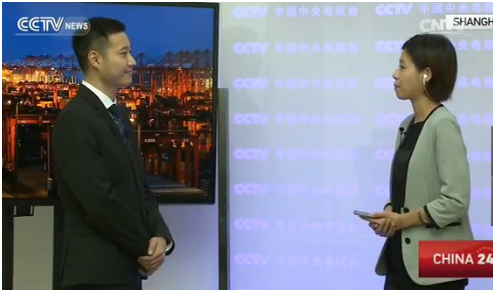
Q1 Please choose one word to describe FTZ's success
If I were to choose one only, that will be the phrase "Negative List". It lists those industries in which foreign investment is restricted or prohibited. What is not on the list is not restricted. It greatly removes barriers for free entry, especially for foreigners .
The FTZ experiment is already moving from Shanghai alone, to four FTZ s last year, to seven more FTZs last month. It clearly shows the Central Government's approval of the initial results.
The list was introduced in 2013 among the many policies aim to improve free entry and reduce bureaucracy. And it is trimming down from 190 to 122 restricted categories last year.
A revised list will be released on October 1, which aims to be applied to an even broader geographical area. But the list is expected to continue to be at least partially closed to foreign investors for the following, namely, financial services, mining, telecommunications, online news services, medical services, culture and entertainment.
Q2 What are the problems?
I would like to mention two problems.
The first one is coordination imperfection. At times different departments are blocking each other.
For example, while FTZ policies allow foreign investors to set up health care units, the health authority has yet to fully allow foreign doctors to practice there.
The second one is the yet-to-be realised role to facilitate a more open capital flow. Commentators have argued that the Shanghai FTZ has failed to live up to the expectation as a pilot to gradually remove capital control to pave for a freely convertible Chinese yuan.
A defense is that while the Shanghai FTZ aims to pose little capital control between the zone and the world, the capital flow between the zone and the mainland is designed to channel through the so-called FT accounts, which are heavily regulated. Consistent with the recent reform in the Chinese exchange policy in August last year , the broader national agenda seems to be a tighter control at times of exchange rate turbulence. Though recently there might be more room for policy experimentation again as our foreign reserves have stopped the declining trend a few months ago. In short, the zone is but an outer gate, as long as the inner gate of the bigger national agenda is not loosen, we shouldn't be seeing a lot of real actions in opening up the capital account.
|