采访视频:http://english.cntv.cn/2015/12/17/VIDE1450352283267458.shtml
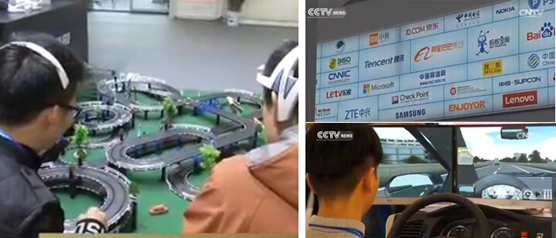
For an in-depth look at the conference, we have Professor Benjamin Chiao, Associate Professor and Assistant Dean at Shanghai University of Finance & Economics. 1. Good evening Mr. Chiao. How is the Internet business going in China? What are the important changes that are taking place in the business? The industrial landscape is clearly changing in two aspects. There will be more government acquisition of Internet services and more international customers for domestic firms. At the government level, downsizing is the way to go. The World Internet Conference highlighted the theme of smart cities that would surely transform our daily lives. The government departments, namely Standardization Administration of China together with the Office of the Central Leading Group for Cyberspace Affairs and National Development and Reform Commission, have set up a framework of indicators on smart cities covering construction, livability, administration, service, industries, economy, security and insurance. By 2020, China will establish 50 national standards on smart cities and start pilot projects in 20 cities. At the firm level, internationalization is what Chinese firms are focusing more on. A few heavyweight Chinese Internet firms are now focusing on emerging markets with huge population base. They expect India, Brazil and Indonesia to explode in sales. They are now exporting the best Chinese Internet services and products there through a series of domestic adjustments. In the first phase, they exported standalone tools that require less domestic adjustment but the life cycle of such tools have proven to be short lived with little customer loyalty. In the second phase, they are spending time on search engines, social network service and e-commerce. The third phase would be O2O, which emerging markets have not yet taken full advantage of. 2. What are the technologies highlighted in the World Internet Conference? And are there any risks along with them? Most highlighted te¬chnologies help connect among and between people and things. Connecting among people, we see ZTE’s PRE-5G technologies. While Huawei is collaborating with Google on the Nexus 6P phones to enter the US market, ZTE is already ranked #4 in US smartphones market. And the ZTE’s chief met Russia’s PM here in Wuzhen to deepen the collaboration in technologies. Its PRE-5G technology is 5-10 times the speed of 4G by just using 4G phones, bridging an important gap when the true 5G standard, which China Telecom is a big part of, is finished around 2020. Connecting among things (and between people and things too), we see Baidu’s self-driven cars and other Internet connected home appliances. Baidu’s vehicles connect with satellites and traffic lights bringing you home without your interference. About the risks, for self-driven vehicles, it is unclear if laws and norms are properly amended so that liabilities are clearly delineated when such devices run into accidents. Who should be compensating when a self-driven vehicle run into a crowd? For 5G, clearly, there is a risk of skyrocketed data fees if your phones are hacked. But some of these risks are being reduced by the hard work of Chinese people. China is cultivating the white-hat business. Wooyun is the country's largest online community of "white-hat" hackers. They are private individuals who deliberately hack corporate and government computer systems to detect and expose security loopholes and help prevent cyber-attacks. |