采访视频链接:http://english.cntv.cn/2015/07/17/VIDE1437082205935627.shtml
1. Can China be a leader in 5G? The world does not yet have a 5G standard. Some technical director of a vendor told me today that perhaps the first 5G experimental products could come in three years. Vendors are now fighting fiercely hoping their technologies could become a 5G standard. To predict the winner, however, the basic considerations are roughly the same for 3G, 4G and 5G. China has learned in a painful way for its transition to 3G. The TD-SCDMA standard, the 3G standard that the Chinese government wanted to support is neither really wholly China nor a real 3G standard. It is slow, at best a 2.5G standard. Customers waited for years before other real 3G standards were allowed to enter China. But policy is getting better as well as the Chinese technologies. In the 4G era, China supported our own TD-LTE standard, a standard as good as the more popular FDD-LTE standard. When the 4G market started, the government only issued the TD-LTE license but not the competing FDD licence until half a year later. This gave a headstart for the TD license. I think the officials understood well the underlying logic for a standard to thrive. The magic to thrive for any network goods is the balance between technological strength and the number of users. A poor technology can capture a huge market simply because many other people are using it. For 5G, I think the question is not just whether China would be a world leader but at what costs? There are other options other than delaying license issuing for competing licenses. The government can for example subsidize the favored standard, or tax the competing standard in some way. That way, users do not need to wait. They just need to pay more for the competing standard.
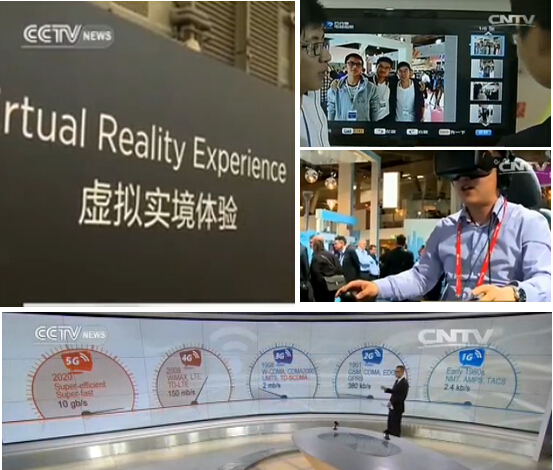
Huawei's 5G prototype claims to reach 20Gbps, almost 200 times faster than 4G. Other vendors reported even higher speed, several times that of Huawei's. All these mean that several movies could be downloaded in just one second. How does that change our lifes? Well, in the mobile world congress held in Shanghai today, people have been talking about home surveillance, cloud computing and virtual reality. These are exactly the applications that would greatly benefit from that kind of speed and minimal latency offered by 5G. We will wear lighter and lighter mobile devices putting more computing power utilizing big data about you stored in the cloud far away from you. |