|
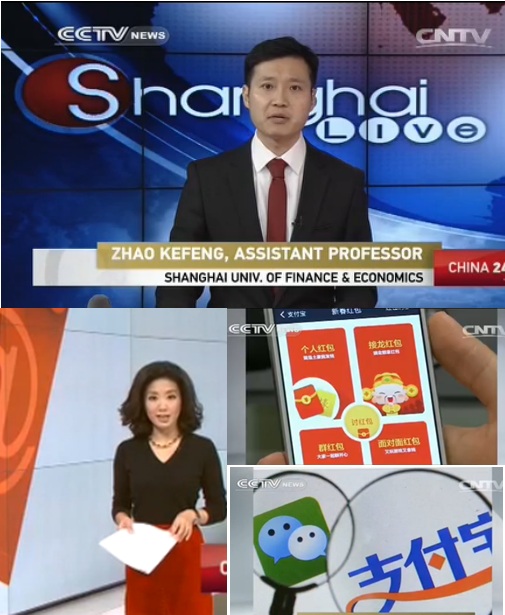
采访视频链接:
1. What do you have to say about the battles on red pocket? Tencent not only blocks links where it has direct competition with Alibaba such as the market of payments. It also blocks links without direct competition such as music. For example, Tencent blocks WeChat users from sharing music using Alibaba’s Xiami and Tiantian Dongting. The immediate effect would be possible reciprocate actions from Alibaba. Also, Tencent could further limit the actions of other competitors. If so, the choices of customers would further be limited. This could end up in very costly legal battles for anticompetitive issues. It also could trigger the government to step in and the government might make the wrong decisions. This could be a bad equilibrium. If not treated properly, the long-term effect would be a possible disaster to neutrality issues on e-commerce. Companies might block each other so we don’t enjoy open platforms anymore. If a firm is allowed to extend its monopoly power in one area into another area, then it is very hard for competitors to innovate and provide more choices to customers. Of course in the real world we don’t see a firm really monopolising every industry, so we need to question whether it is always necessary for other players to step in. Oftentimes the money goes to lawyers and rent-seeking officials, and both the firms and customers are worse off. Economists would almost always agree that there is a small set of things that regulators should step in, though the degree of which is always subject to debate.
From taxi rides to online banking, we all know that Tencent and Alibaba are fighting head-to-head on more areas. Alibaba lags behind the social side and gaming side of mobile and Tencent lags behind in the B2B, B2C and payments. But then one year ago Tencent launched what Alibaba’s Jack Ma termed as a “Pearl Harbor” attack on Alipay, which was immensely successful, leading customers to think that WeChat payment has beaten Alipay. Indeed, Tencent won 5 million bank accounts linked to WeChat in two days. If the success is repeated again this year, the payment market would be more equally shared by these two giants. There is of course an issue of whether customers have the rights to share links by any companies they want. And the usual response would be for government to step in or resort it to the legal system. The former could create as much problems as it solves. The latter has to rely on an impartial legal system. We should not underestimate the market’s ability to resolve problems. For example, third party apps could emerge that do not block anything. Industry special interest groups could also help set some of the code of conduct. As private companies, they really have no obligations to provide every convenience customers want, just as it is a usual practice for some restaurants to not allow people from bringing their own wines. Private companies need to make money and we all understand that. There is of course some degree of blocking which is socially unacceptable. Laws and regulations always fall behind in new areas. It will take some time to find the right balance. |